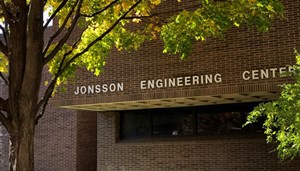
The Bachelor of Science in Robotics Engineering program has been officially approved by the New York State Education Department! Incoming students, Class 2030, can now choose ROBT as their major. Current students also have the option to switch to or add ROBT as a major. Please check with the contract information below to ensure program compatibility. All students interested in joining ROBT should register for ROBT-1010 Introduction to Robotics in Fall 2026.
Robotics is transforming industries across manufacturing, healthcare, transportation, and beyond, creating a growing demand for engineers who can design and integrate complex intelligent systems. The B.S. in Robotics Engineering at RPI provides a rigorous, interdisciplinary education that combines mechanical design, electronics, computing, and artificial intelligence. Jointly administered by the Departments of Electrical, Computer, and Systems Engineering and Mechanical, Aerospace, and Nuclear Engineering, the program leverages RPI’s established strengths in robotics and related fields. Graduates will be prepared to innovate in a rapidly evolving technological landscape and contribute to the advancement of autonomous and intelligent systems.
Contact Information
John Wen
Professor, Electrical, Computer, & Systems Engineering
wenj@rpi.edu
Rama Hamarneh
Staff Adviser, ECSE Department
ramah@rpi.edu
Curriculum
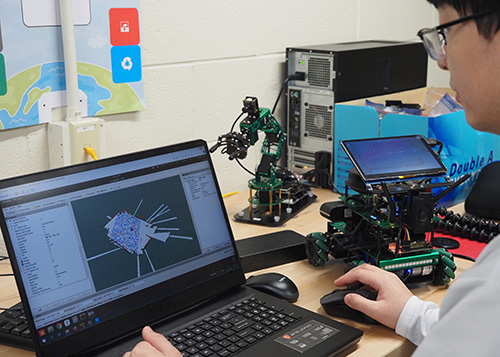
Electrical Eng + Computer Eng + Mechanical Eng + AI and Machine Learning
Interdisciplinary coursework in robotics, mechanics, electronics, programming, and artificial intelligence.
Research
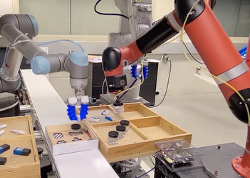
Industrial Robotics | Robotic Manipulation | Planning and Control | Aerial Robotics | Assistive Robotics | Human-Robot Interaction
Cutting-edge research addressing real-world challenges across diverse application domains.
Hands-On Learning & Facilities
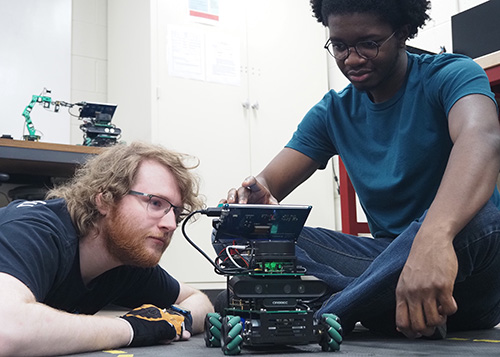
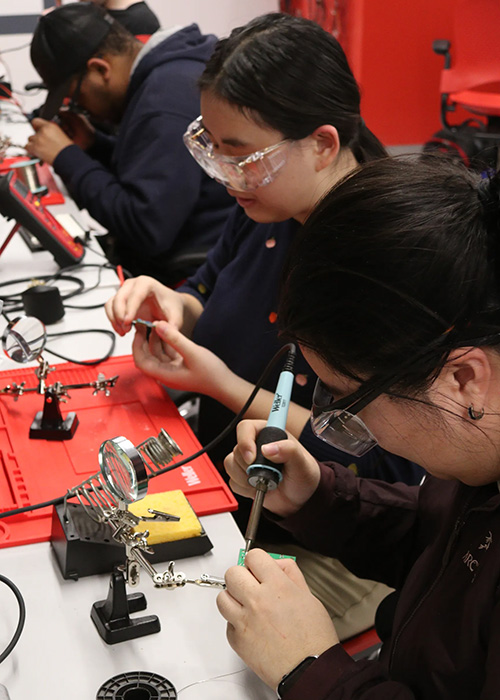
Lab Courses | The Forge Maker Space | Mercer XLab | The Mill
 Student Experience & Resources
RPI Robotics Club | RPai | Undergraduate Research Projects | Internships and Co-ops
Program Highlights
Interdisciplinary Foundation
The program integrates core concepts from mechanical engineering, electrical engineering, and computer science to reflect the inherently cross-disciplinary nature of robotics. Students develop expertise in sensing, actuation, control, and intelligent decision-making within unified robotic systems.
Hands-On, Experiential Learning
Students engage in project-based coursework and practical design experiences that emphasize building, testing, and deploying robotic systems. This approach ensures graduates are prepared to apply theory to real-world challenges.
Research and Faculty Strengths
The program builds on RPI’s nationally recognized research in areas such as robotic manipulation, control theory, machine learning, industrial automation, and human-robot interaction, providing students access to cutting-edge knowledge and facilities.
Student Demand and Growth
Robotics courses at RPI consistently fill to capacity, reflecting strong and sustained student interest. The program responds to growing demand from prospective and current students seeking formal education in robotics.
Career Relevance and Impact
Graduates will be prepared for careers across diverse sectors including manufacturing, healthcare, defense, and emerging technology fields, addressing critical workforce needs in robotics and automation.
Pipeline and Recruitment
The program aligns with increasing K–12 engagement in robotics through initiatives such as FIRST Robotics, creating a natural pathway for incoming students and strengthening enrollment within the School of Engineering.