News

New York State has set some of the most ambitious climate targets in the nation. This has made our region a productive environment for sustainability research while generating a market for green energy technologies.

In today’s research environment, computing power is crucial. For years, Rensselaer engineers have used our Artificial Intelligence Multiprocessing Optimized System (AiMOS) – the most powerful supercomputer housed at a private university and the 24th most powerful in the world – to advance AI and machine learning and to model everything from drug molecules to microchips.

In 2022, the federal government committed to a $52.7 billion investment in domestic semiconductor research, development, manufacturing, and workforce development, to stimulate the economy, repair global supply chains, and improve national security through the CHIPS and Science Act.

Rensselaer’s contributions to space exploration are widely known and celebrated. The announcement that School of Engineering alumnus Reid Wiseman ’97 will command the upcoming Artemis II mission – which will pave the way for NASA’s return to the moon – brings us full circle, because prior to becoming RPI’s former president, George M.
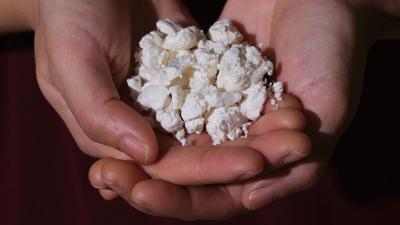
For the first time, researchers have used bacteria to “upcycle” waste polyethylene

Rensselaer Polytechnic Institute doctoral student Emily de Stefanis is one of 60 recipients of the U.S. Department of Energy (DOE) Office of Science Graduate Student Research (SCGSR) award.
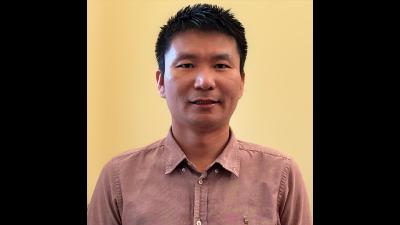
Jian Shi, Ph.D., associate professor in both the Department of Materials Science and Engineering and the Department of Physics, Applied Physics, and Astronomy at Rensselaer Polytechnic Institute (RPI), has been selected for the Simons Foundation's Pivot Fellowship.

Rensselaer Polytechnic Institute has announced the addition of Thomas G. Capek ’86, senior vice president and chief engineer at Corning Incorporated, to Rensselaer’s Board of Trustees.
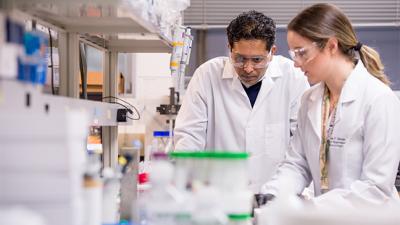
A team led by scientists at Rensselaer Polytechnic Institute has 3D-printed hair follicles in human skin tissue cultured in the lab. This marks the first time researchers have used the technology to generate hair follicles, which play an important role in skin healing and function.

Nikhil Koratkar, Ph.D., John A. Clark and Edward T. Crossan Professor of Engineering at Rensselaer Polytechnic Institute, has been named a fellow of the American Physical Society (APS). Koratkar was recognized for his pioneering contributions to the field of nanoscale science and technology and the use of nanoscale materials in composites and energy storage devices.